
Science Magic Cube Series

$15.00
We believe that knowledge shouldn’t be confined to books. It can also be remembered through fun and engaging experiences.
The Science Magic Cube series transforms the journey from memorization to understanding into an action you can practice again and again. Turning what you once saw and quickly forgot into knowledge you remember with every twist.
Product Specifications
► Dimensions: Approx. 6 × 6 × 6 cm (cube body)
► Material: ABS Plastic
► Contents: 1 Science Magic Cube
► Adjustable Structure: Detachable design for easy internal cleaning and maintenance. Screw tightness can be adjusted as needed.
Safety Precautions
► This product contains small parts. Keep out of reach of young children to prevent accidental swallowing. Parental supervision is recommended when used by children under 3 years of age.
Description
Science Magic Cube | Explore the Elements
Knowledge Beyond Books — Learn Through Every Twist
Turn the concept of how elements are related to one another into a cube that can be scrambled and rearranged.
For many people, the periodic table is one of the most intimidating parts of chemistry class. A dense chart filled with countless elements and group names can be difficult to memorize. Although these elements represent a world of three-dimensional scientific knowledge, they are often presented in a flat, two-dimensional chart. No wonder so much of what we learn is quickly forgotten.
A magic cube offers a unique way to bring knowledge to life. It consists
of 27 individual squares, each representing an independent unit of information. Yet every square must align with the others to form a complete picture.
This structure reflects the very nature of knowledge: each detail is a distinct piece of information, but true understanding comes from recognizing how these pieces connect and relate to one another.
With this cube, you can experience the process of scrambling and reorganizing scientific knowledge with your own hands, rather than simply looking at a printed chart.
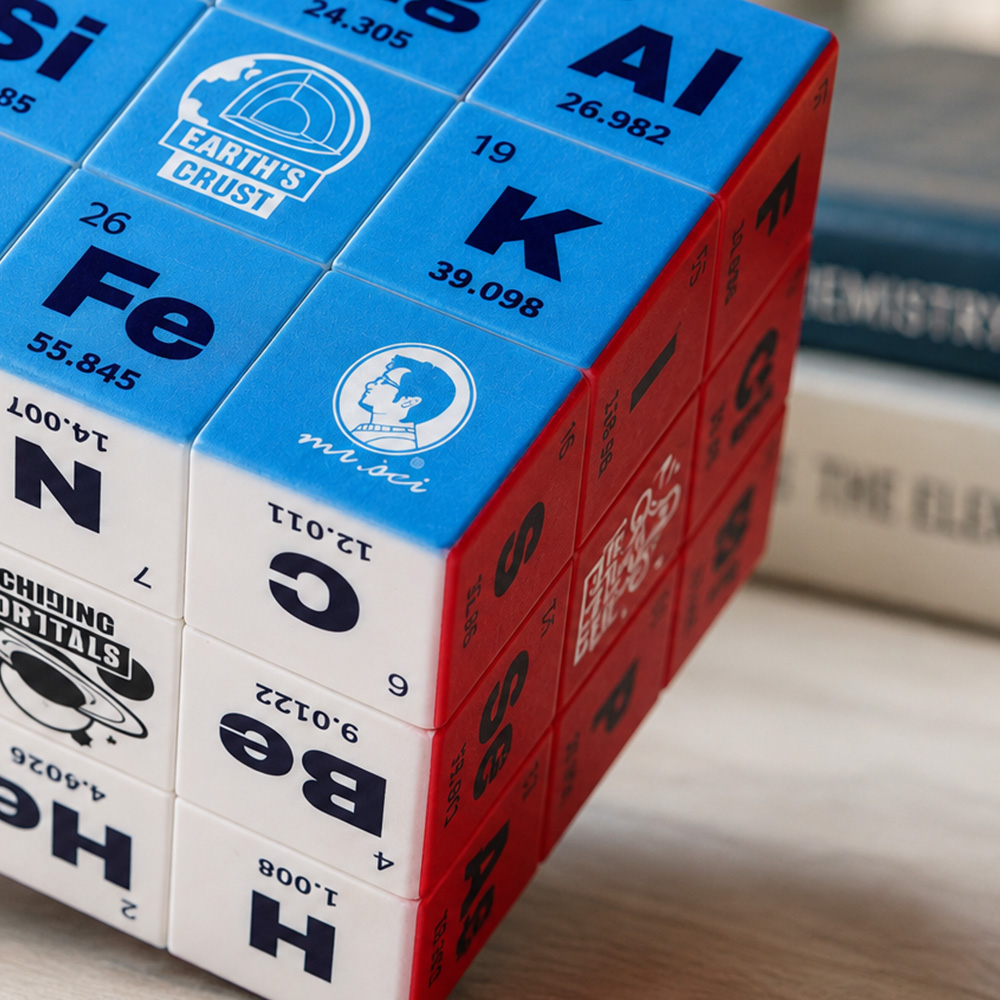
Six Colors, Six Scientific Themes
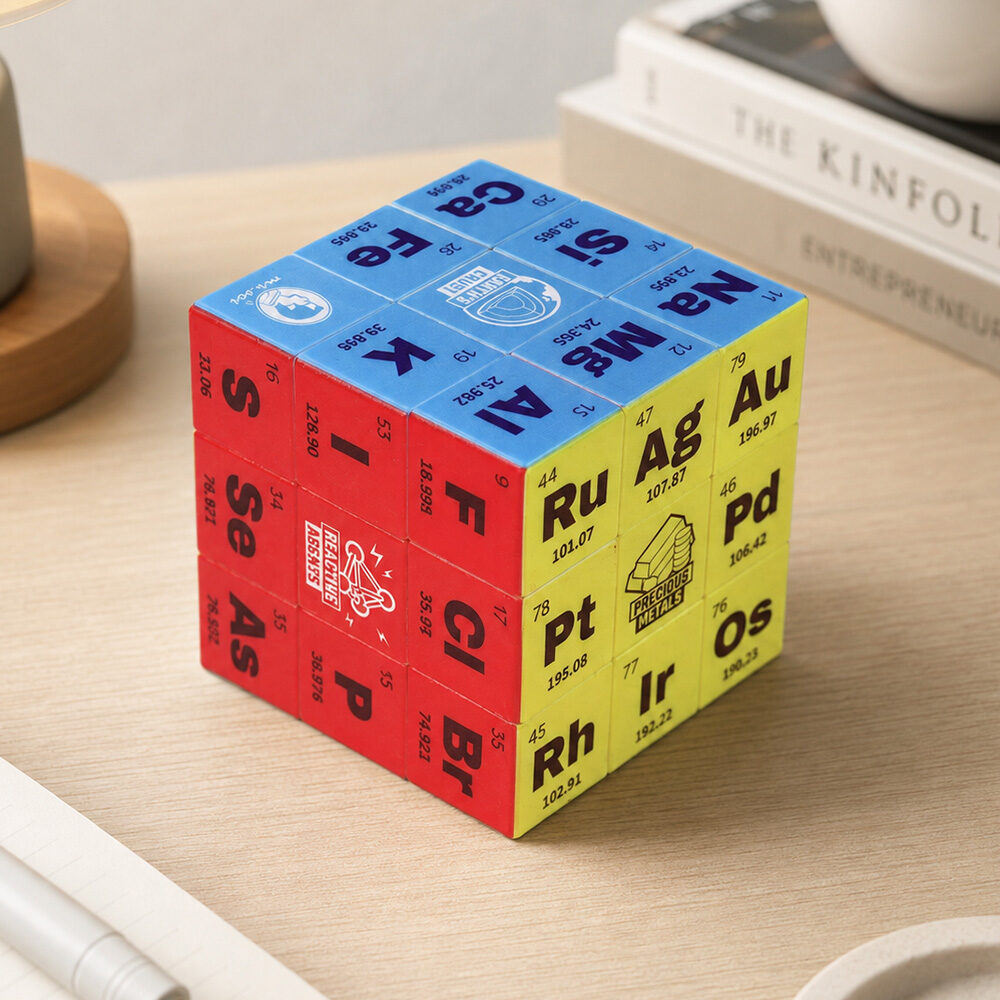
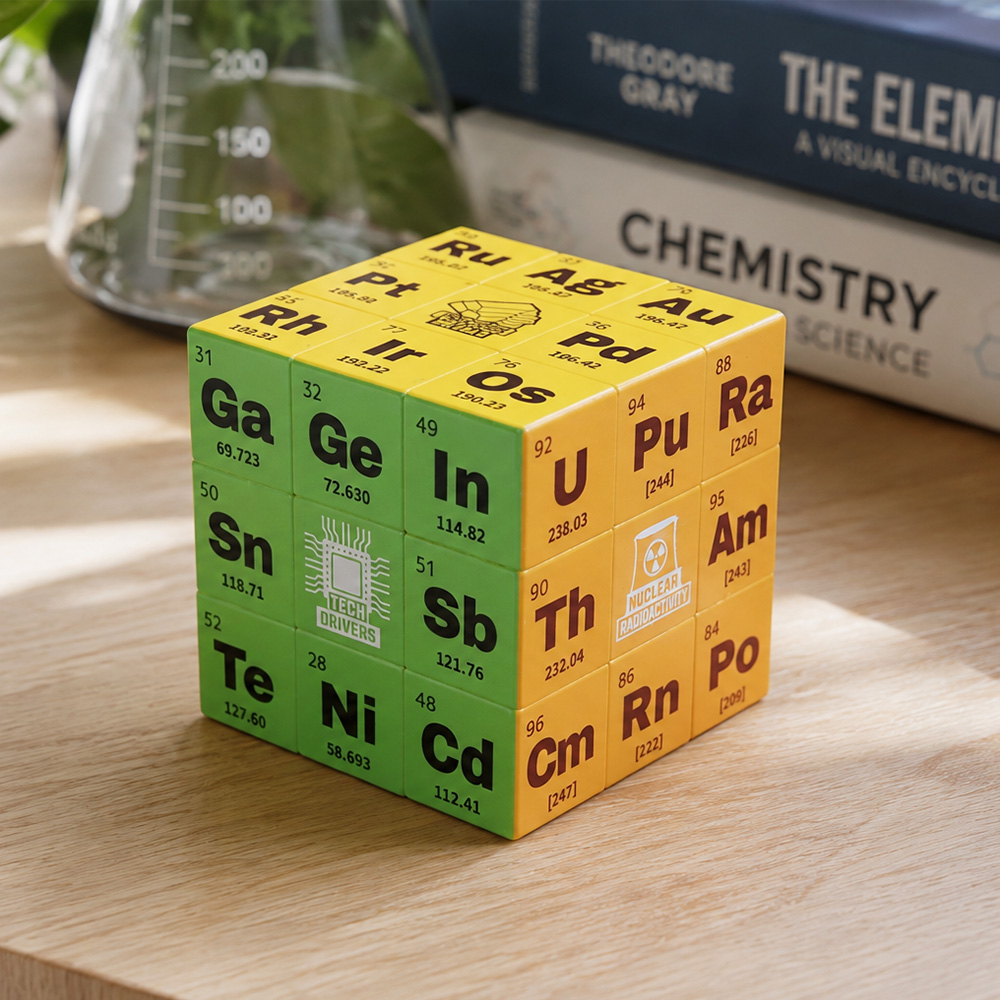
Rather than simply reproducing the entire periodic table, this cube uses six distinct colors to group elements into six scientific themes:
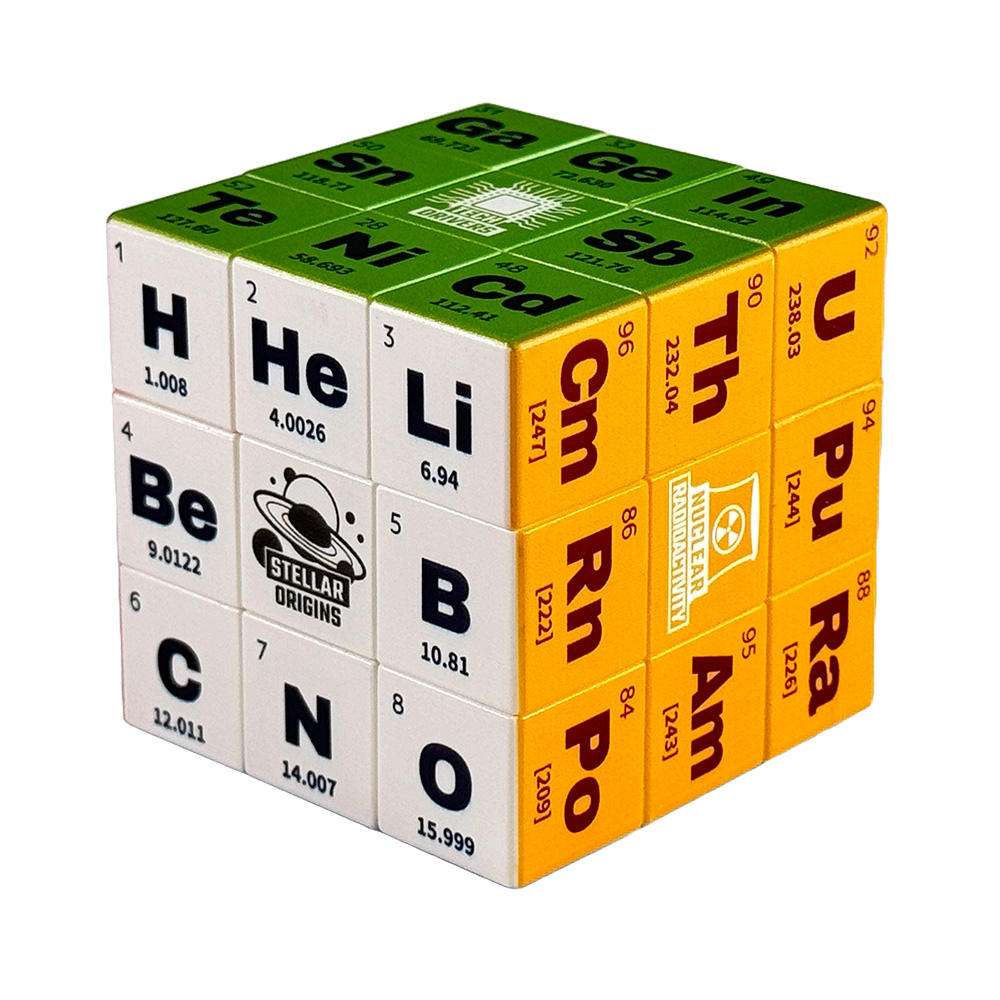
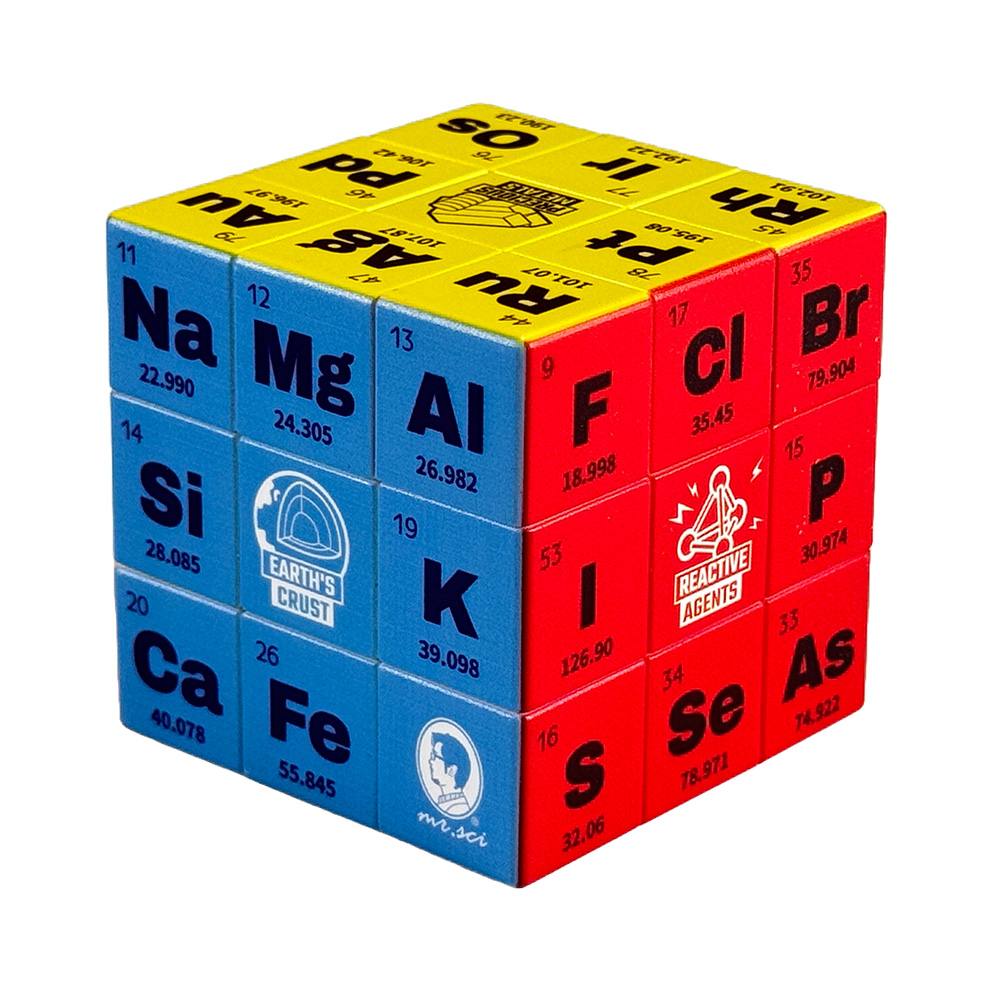
- Red | Halogens & Typical Nonmetals: Chemically reactive elements that play important roles in chemical reactions.
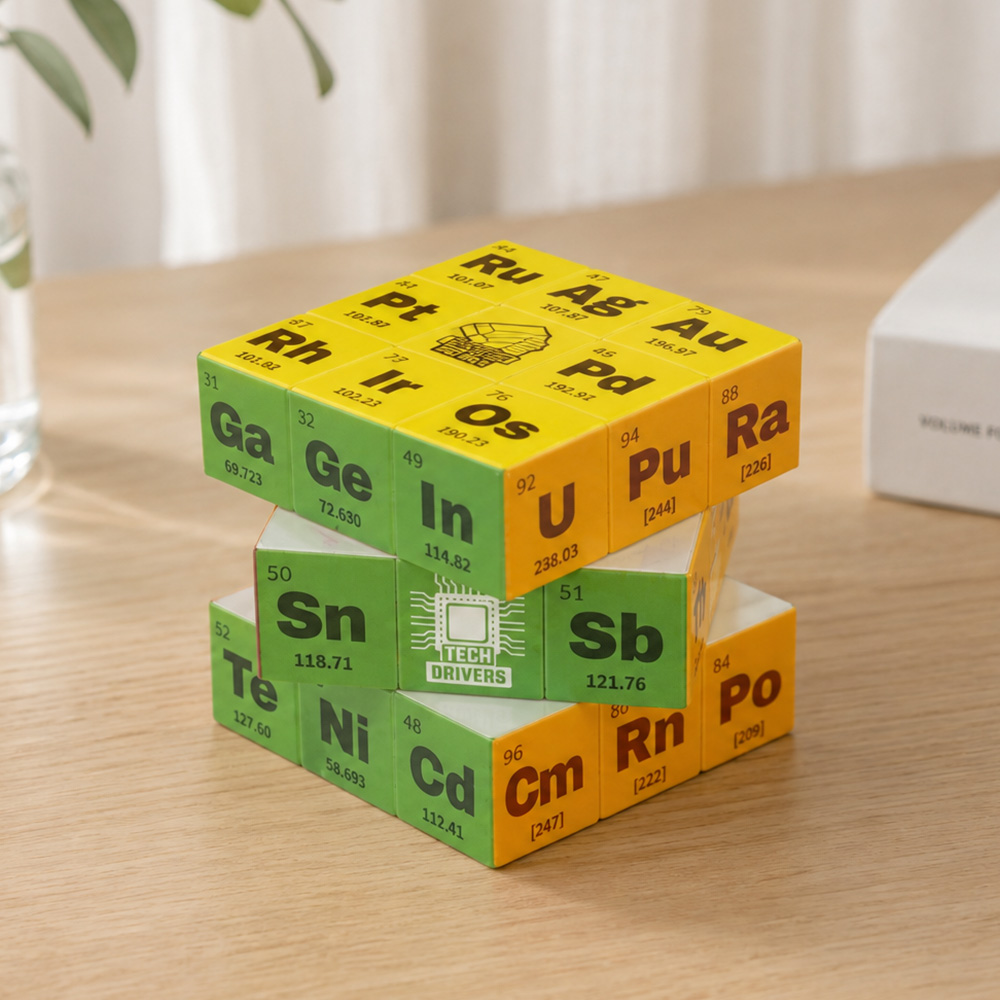
- Green | Semiconductors & Electronic Materials: Elements widely used in semiconductors and the electronics industry.
- Yellow | Transition Metals: Includes precious metals such as gold, silver, and platinum.
- White | Lightweight Elements of the Universe: Elements that help tell the story of the universe’s chemical evolution.
- Orange | Radioactive Elements: Elements associated with radioactivity and tremendous energy.
- Blue | Major Metals & Metalloids: Elements that make up much of the material world around us.
As you twist the cube, elements of the same color are brought together into designated sections, allowing you to physically rearrange and explore the relationships between different groups of elements.
Perfect for students learning chemistry, as well as adults who appreciate science-inspired design and enjoy having a clever conversation piece on their desk.
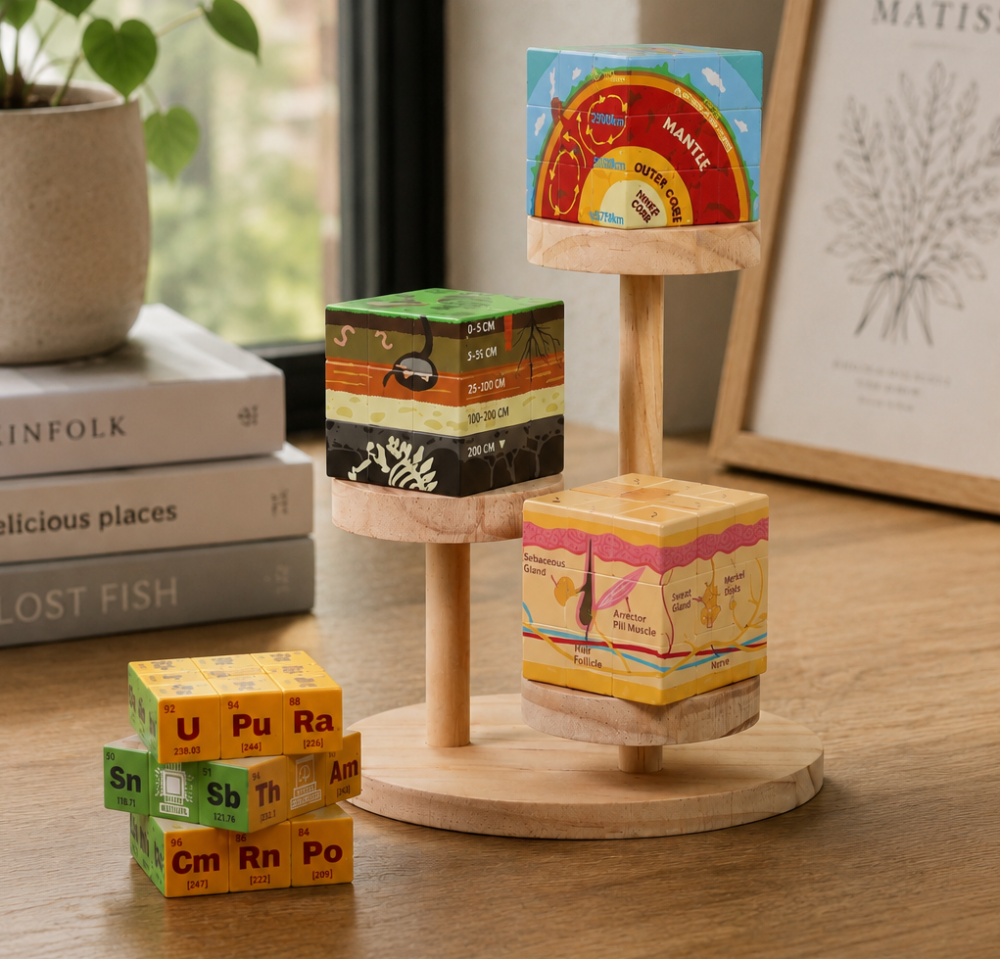
Science Magic Cube | Soil Profile Adventure
Knowledge Beyond Books — Learn Through Every Twist
One of the Least-Explored Illustrations in Textbooks
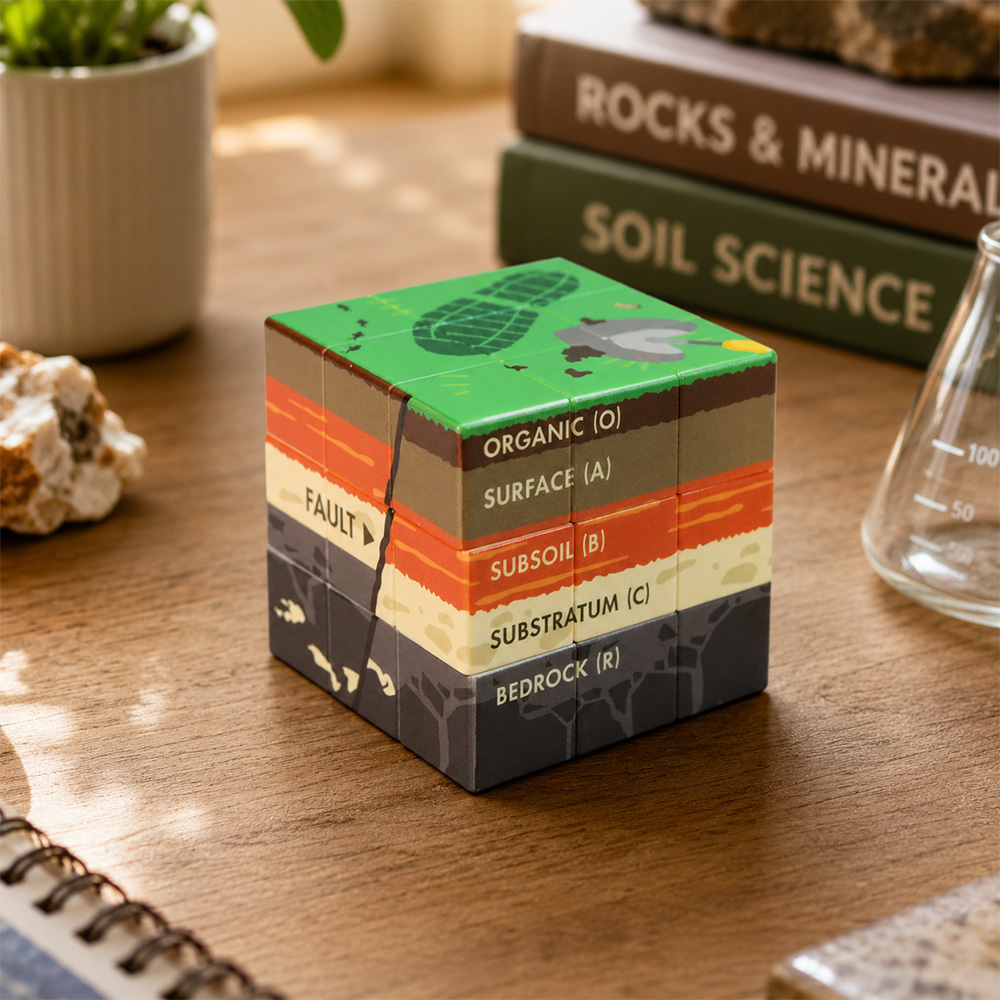
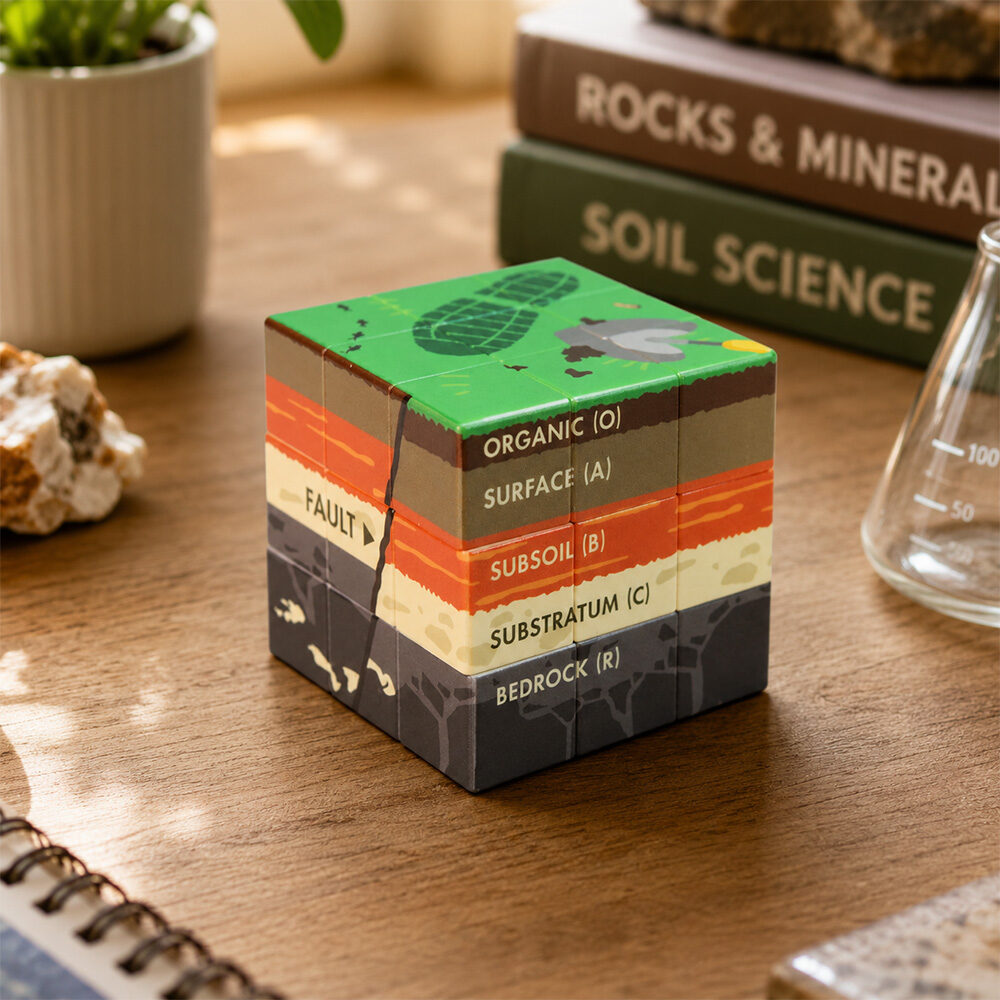
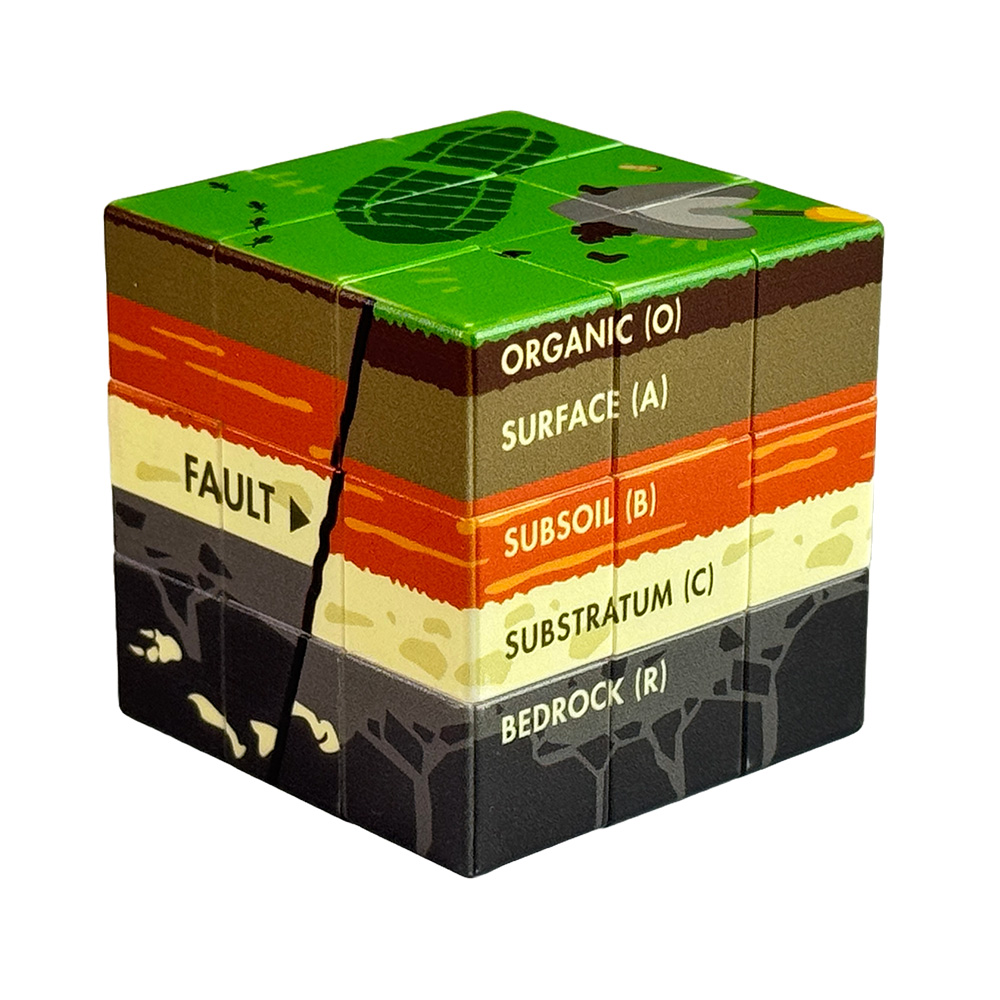
A soil profile is something most people have only seen in a textbook illustration, perhaps just once during a science lesson. Although it represents a fascinating three-dimensional world beneath our feet, it is usually compressed into a flat, two-dimensional diagram. No wonder it is so easily forgotten.
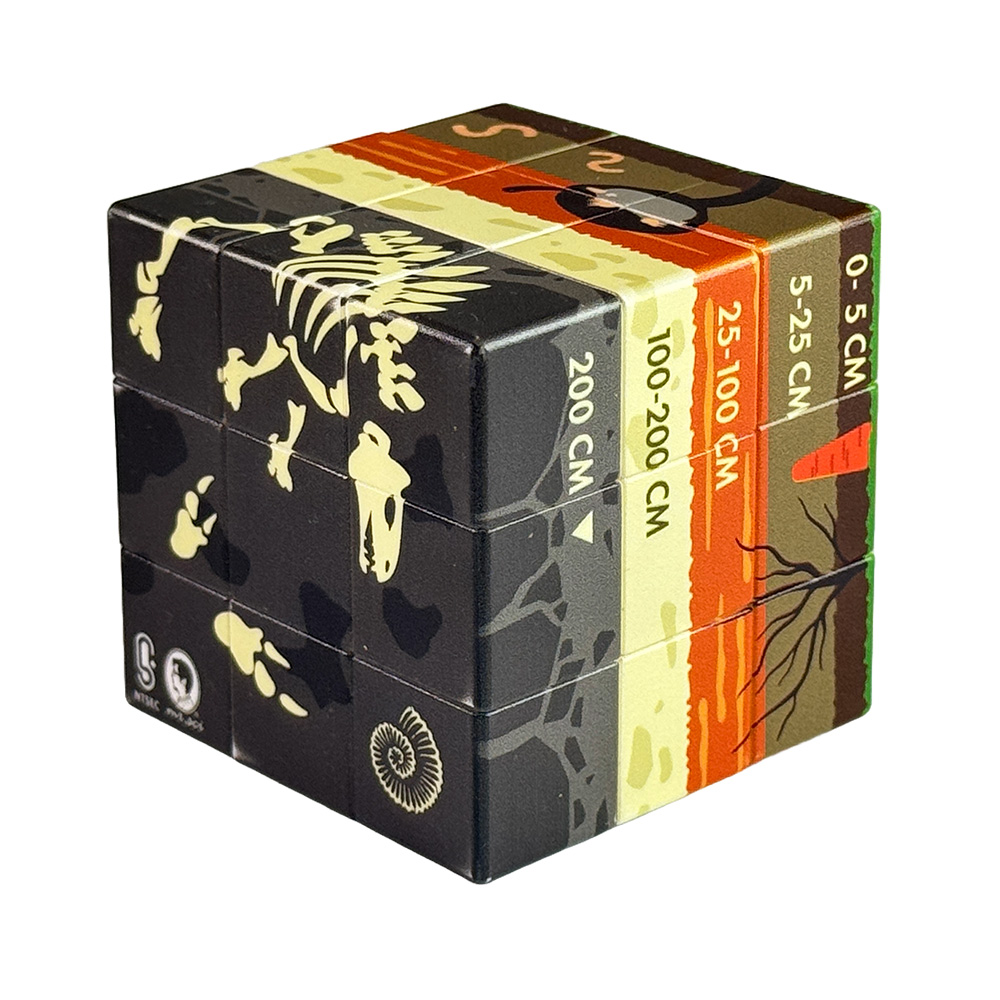
From the leaf litter and humus layer at the surface (0–5 cm) all the way down to the bedrock and fossil layer at a depth of 200 cm, different forms of life inhabit different levels of the soil. Earthworms, moles, and plant roots each occupy their own places within this underground world.
This is one of the most overlooked natural landscapes, yet one that few people have ever had the chance to truly explore. For most of us, the different layers of soil exist only as illustrations in textbooks.
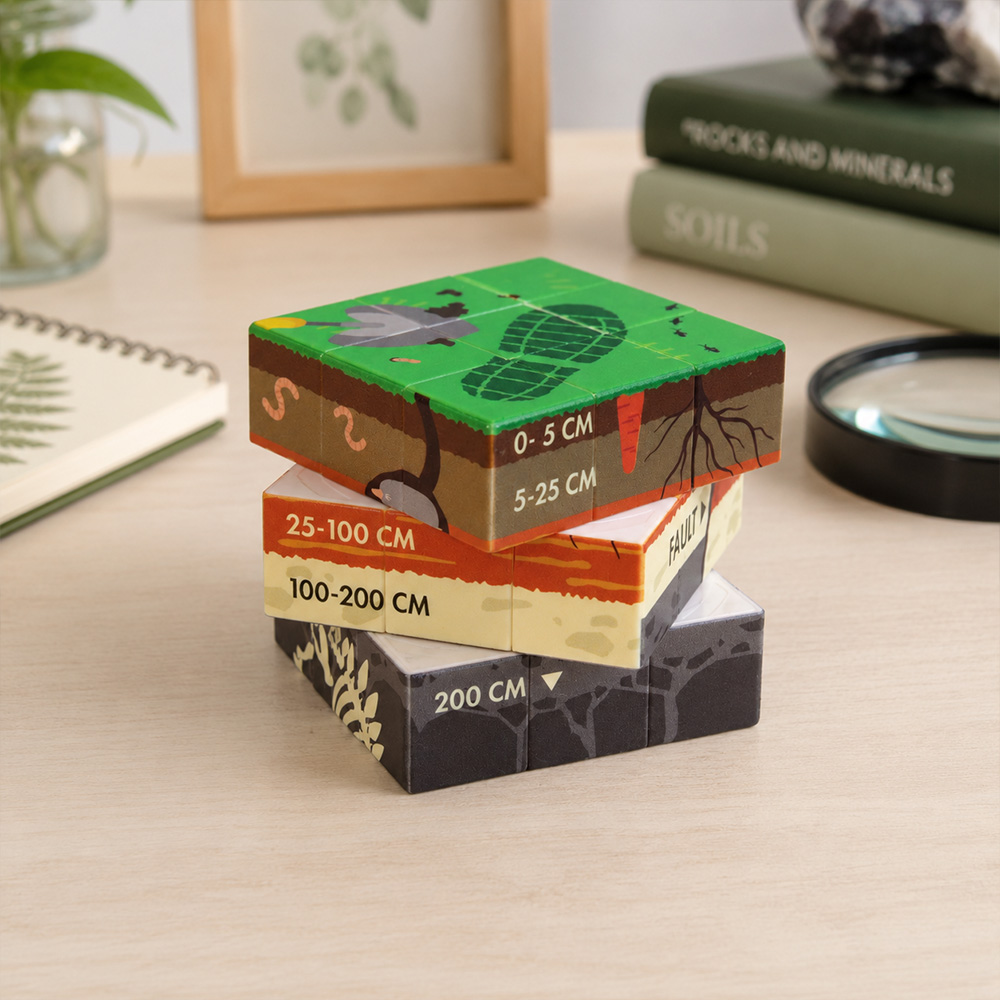
With every twist of the cube, the hidden world beneath our feet is brought into the palm of your hand, revealing a landscape we walk on every day but rarely get to see.
Perfect for science and nature teachers as an educational teaching aid, or for parents who want to introduce children to the fascinating world beneath their feet.
Science Magic Cube | Exploring Human Skin
Knowledge Beyond Books — Learn Through Every Twist
Turn the Complete Structure of Human Skin into a Cube You Can Scramble and Reassemble
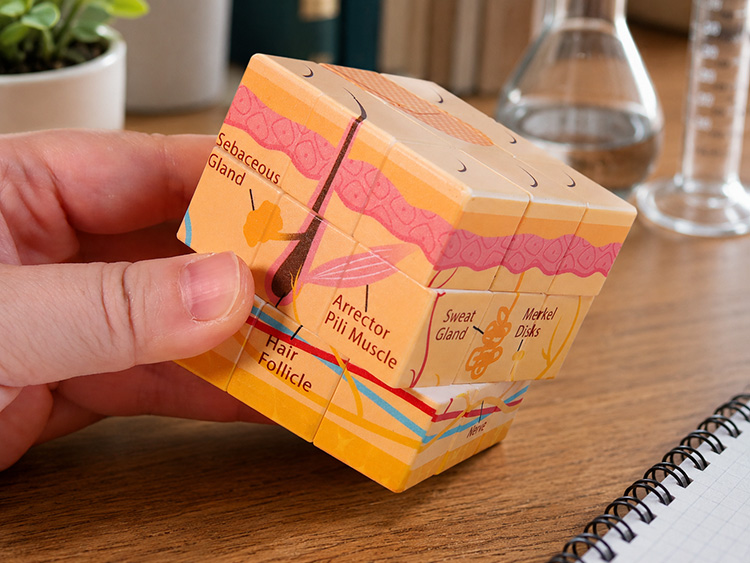
Have you ever looked at a cross-sectional diagram of human skin in a biology textbook, only to forget which layer contains the blood vessels moments later?
The skin is a three-dimensional structure, yet it is often reduced to a flat, two-dimensional illustration. No wonder its complex anatomy can be difficult to remember.
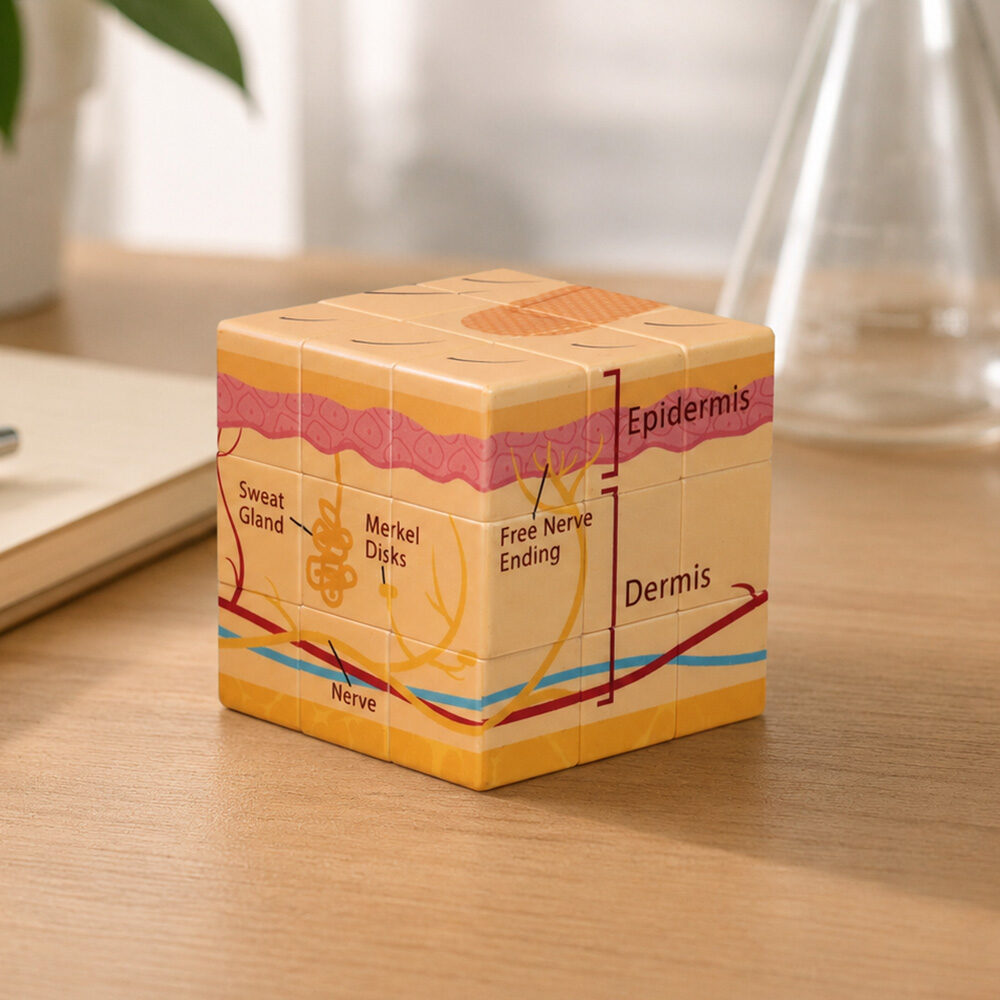
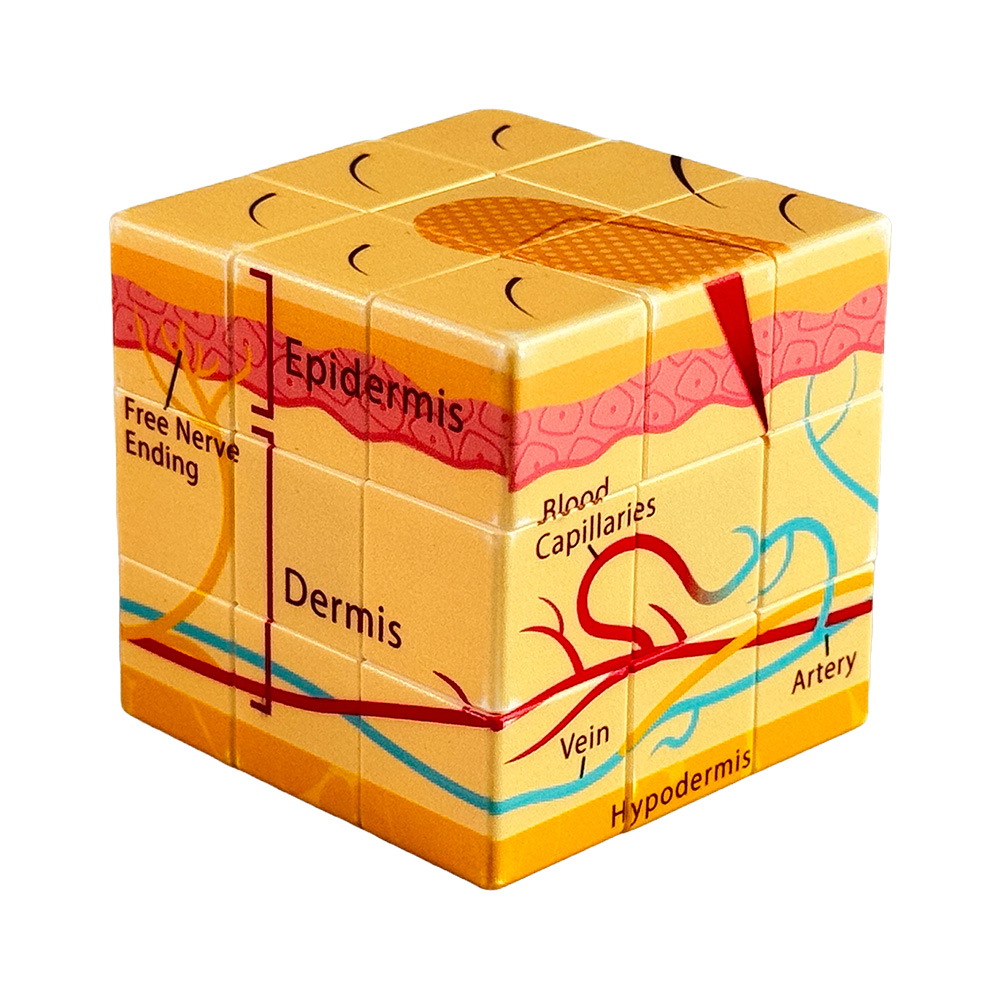
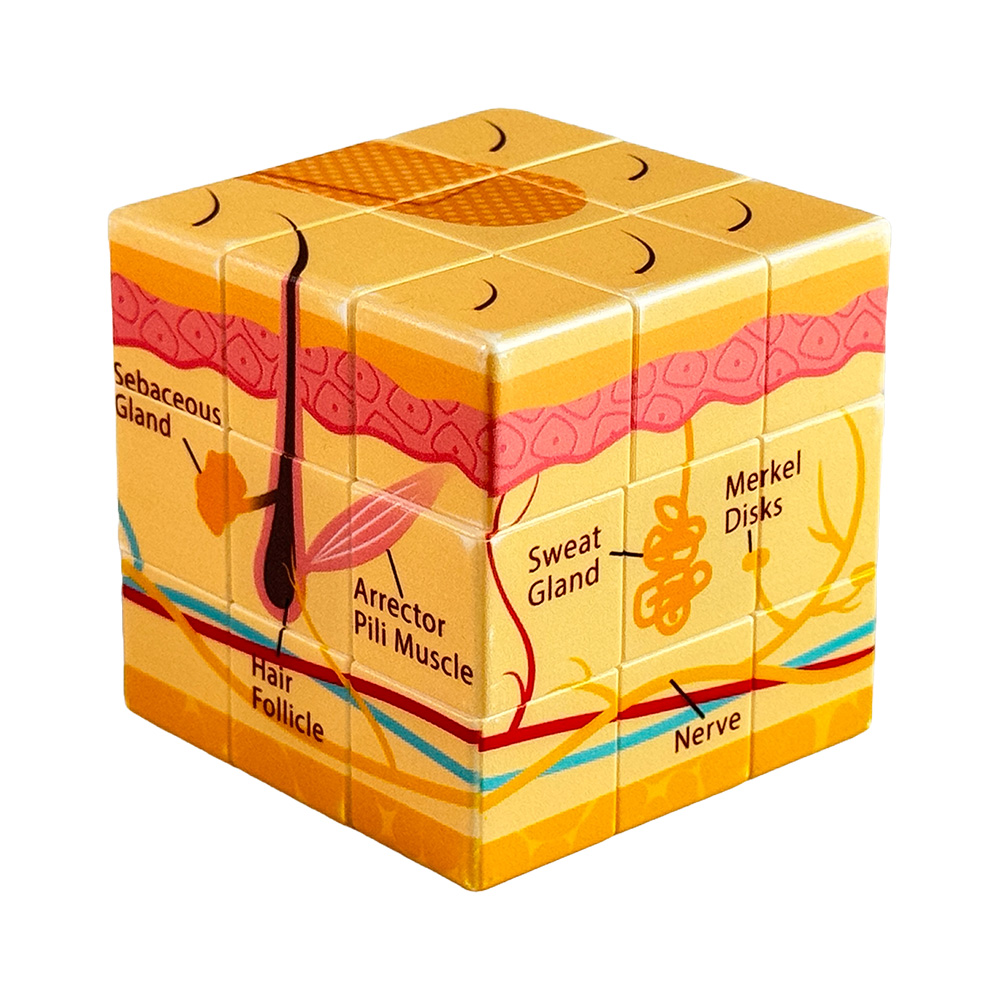
From the epidermis and dermis to the subcutaneous tissue, this cube brings blood vessels, veins, arteries, sebaceous glands, hair follicles, and arrector pili muscles to life across its 27 individual squares.
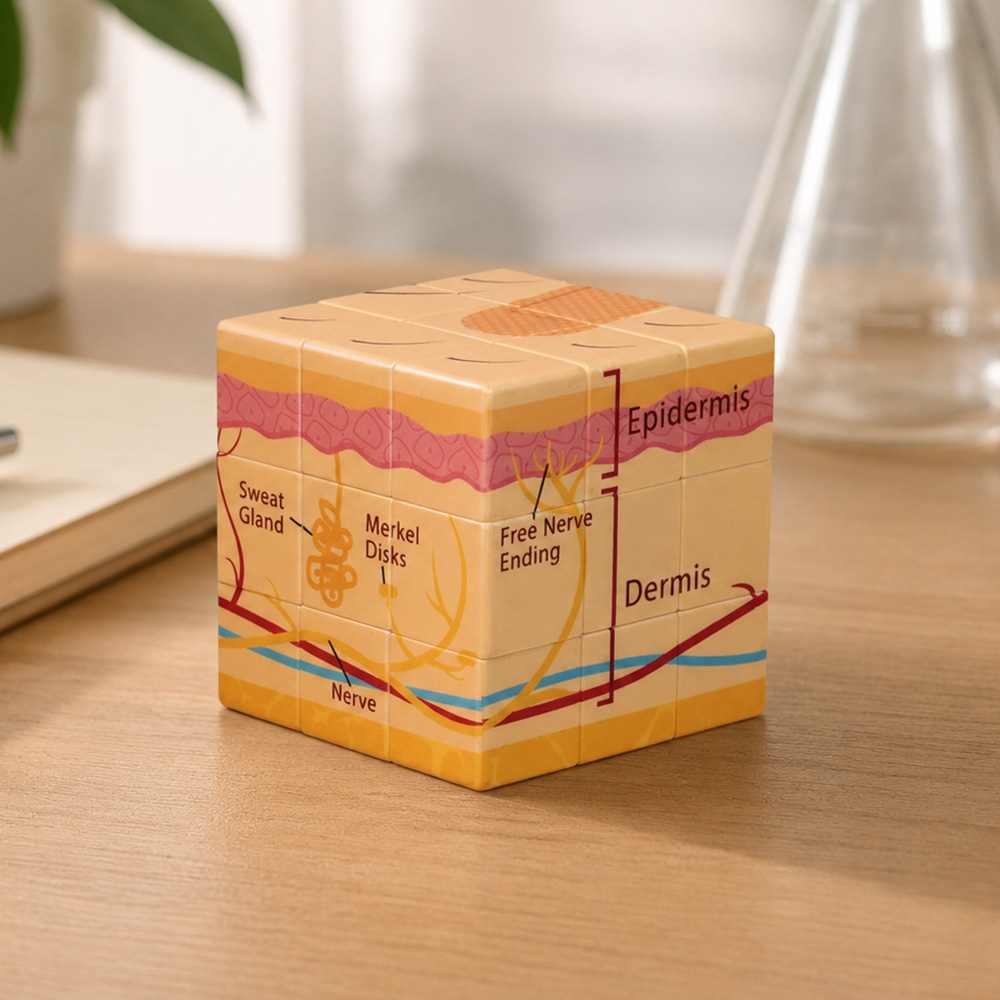
As you twist the cube, you are essentially rearranging a complete cross-sectional view of human skin. How blood circulates, where hair follicles are located, and how different structures are organized within each layer are no longer just terms in a textbook. They become anatomical details you can explore and piece together with your own hands.
Science Magic Cube | Earth & Atmosphere
Knowledge Beyond Books — Learn Through Every Twist
How Thick Is the Atmosphere? How Hot Is Earth’s Core?
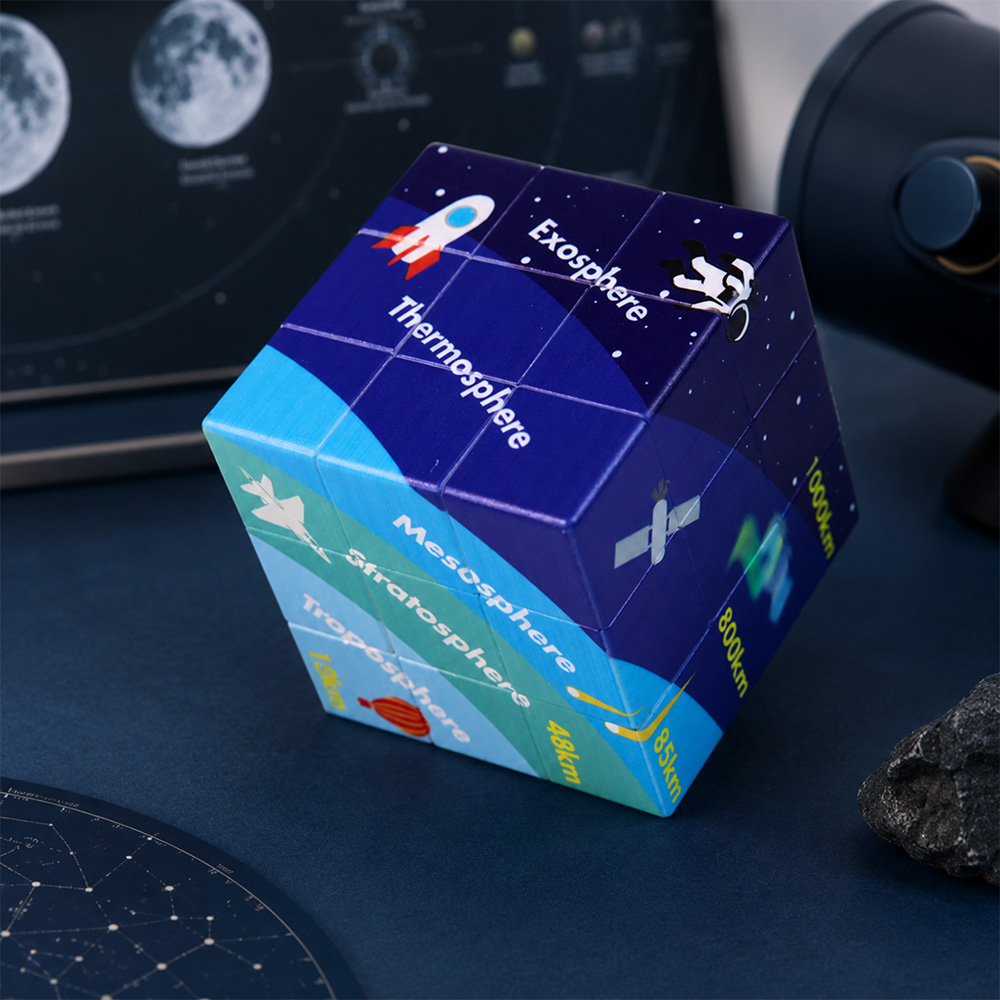
Most people would struggle to answer these two questions. Even after studying the layers of the atmosphere in science class, many of us can barely tell the stratosphere from the mesosphere once the exam is over.
These are three-dimensional scientific concepts, yet they are often compressed into flat, two-dimensional diagrams. No wonder they are so easily forgotten.
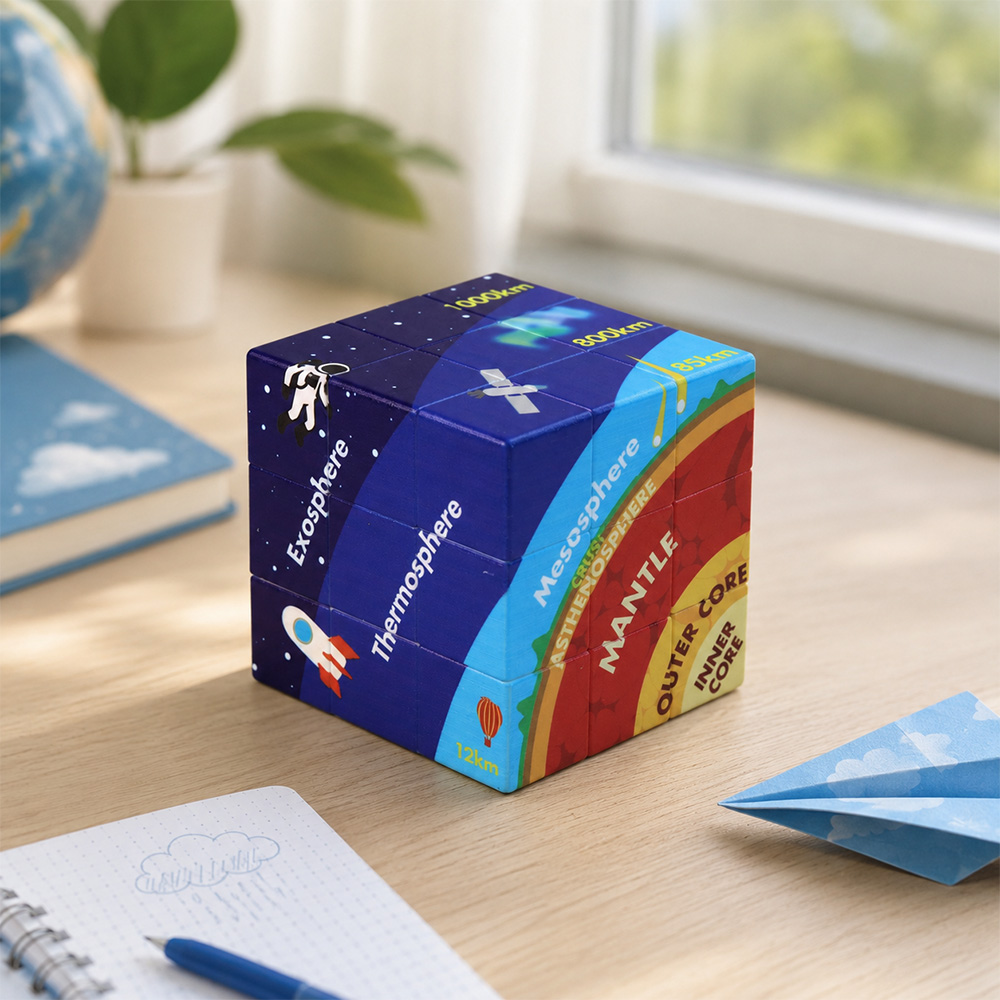
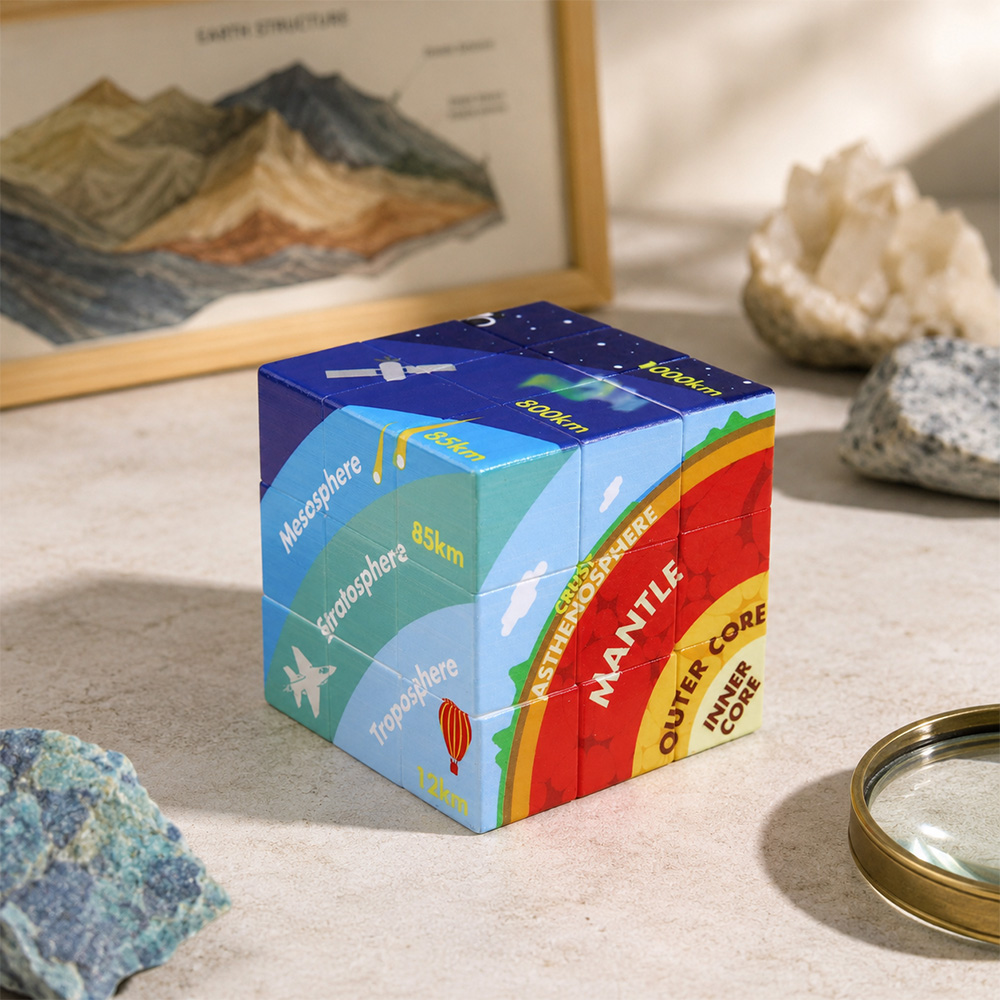
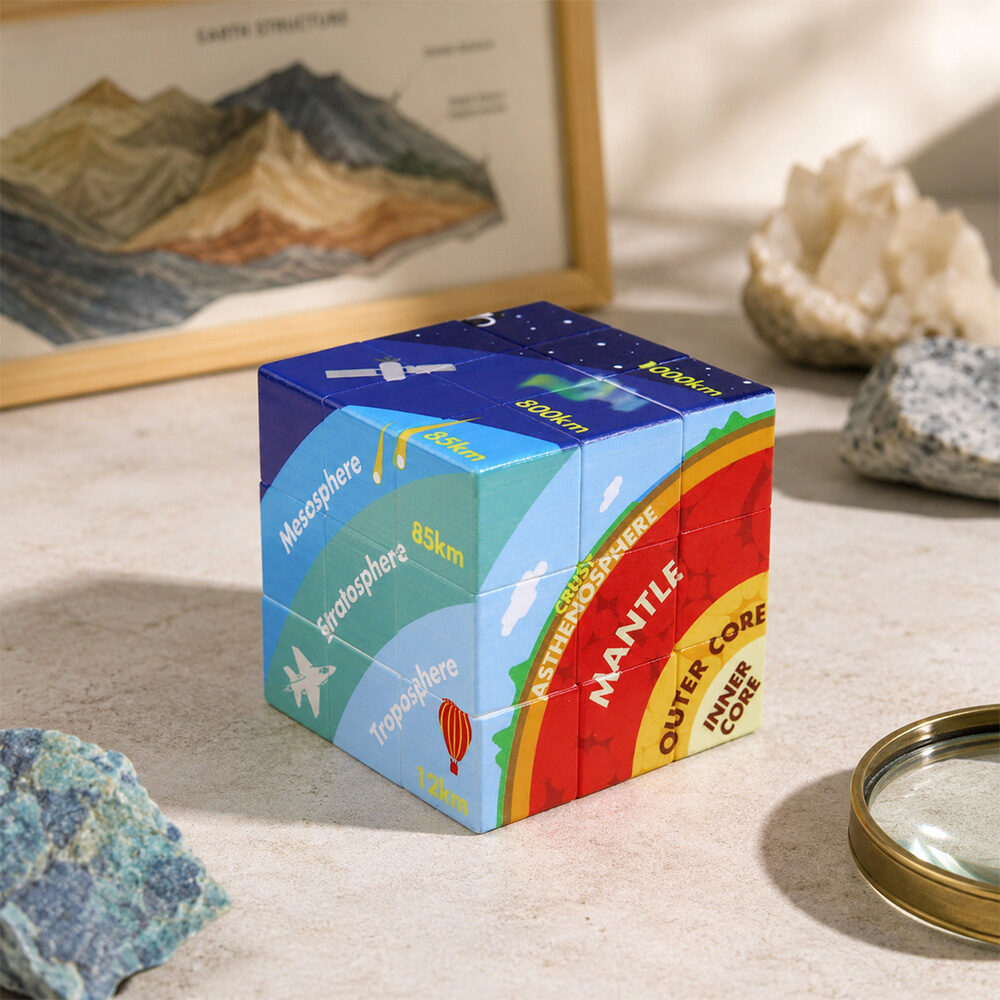
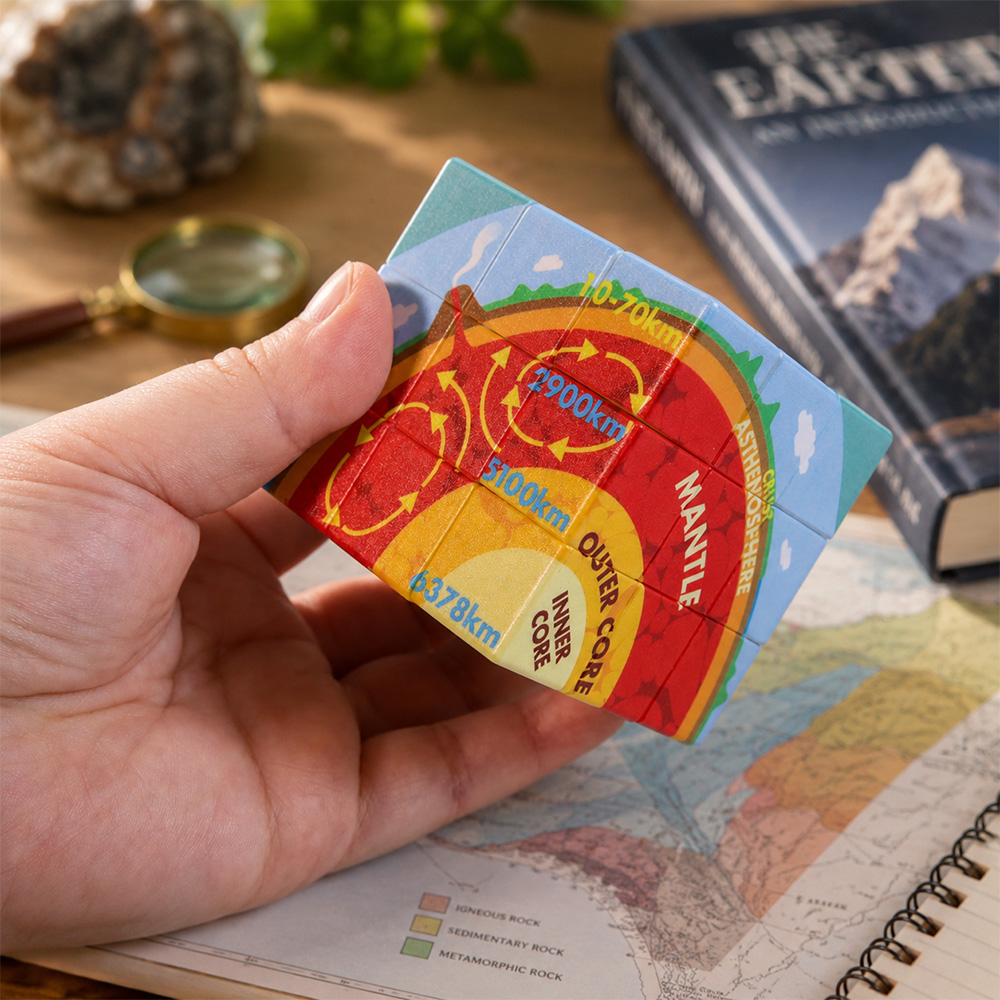
This cube takes you on a journey from the Earth’s internal structure all the way up through the layers of its atmosphere.
Altitude measurements are clearly displayed on the cube’s surface, accompanied by illustrations of airplanes, hot air balloons, satellites, astronauts, and more to help visualize where things belong.
As you twist the cube, abstract questions such as “How thick is the atmosphere?” and “How far beneath our feet is the Earth’s inner core?” become distances you can explore and experience with your own hands.
Additional information
| Pattern | Earth & Atmosphere, Explore the Elements, Exploring Human Skin, Soil Profile Adventure |
|---|